

History, Theology and Environmental Responsibility
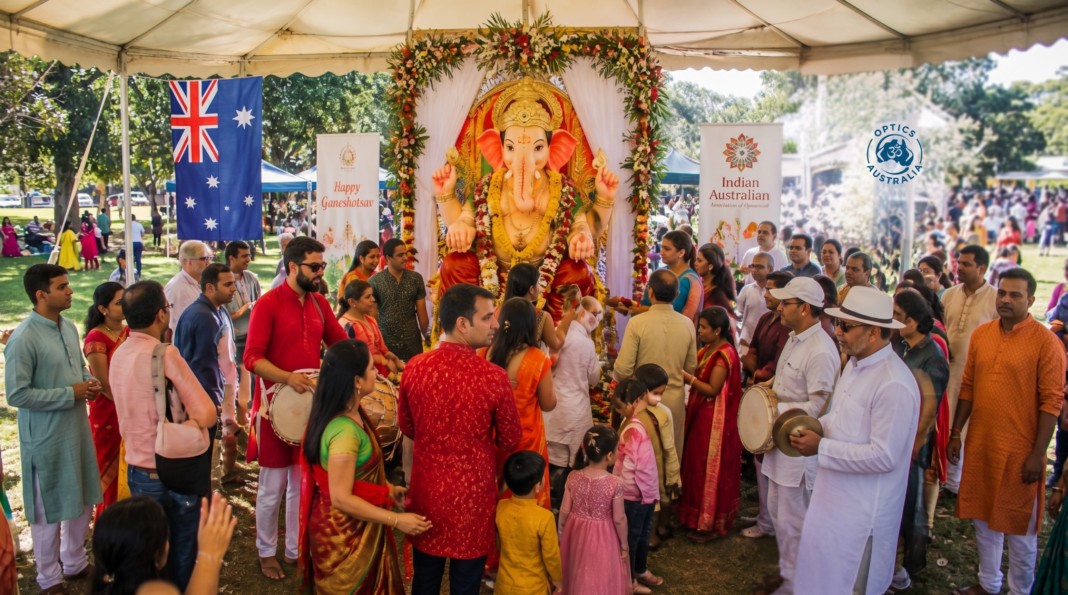
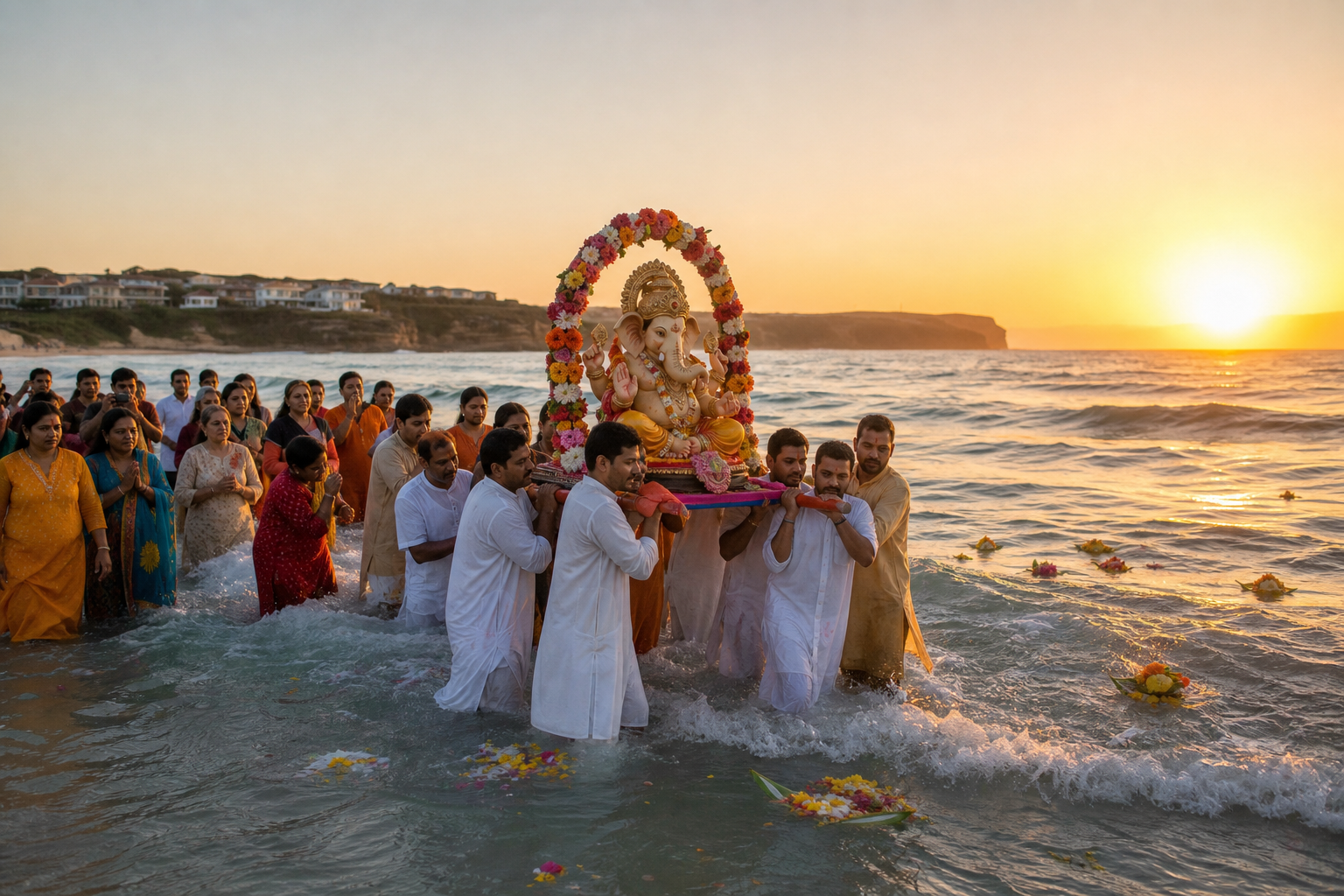
gaṇeśotsava (गणेशोत्सव), occurring between the period of gaṇeśa caturthī (गणेश चतुर्थी), to ananta caturdaśī (अनन्त चतुर्दशी), combines devotion, community and a profound symbolism of return. gaṇapati visarjana, the ceremonial immersion of gaṇeśa’s mūrti at the conclusion of the festival, is not an arbitrary disposal of an object. It marks the completion of a temporary ritual presence: the deity is invoked into a consecrated image, worshipped, and then ceremonially released back to the elements.
In its traditional form, the practice is compatible with environmental responsibility because the mūrti is made from natural, water-soluble clay and the accompanying decorations and offerings can be biodegradable.
A mūrti or vigraha of a Hindu deity is not to be treated the same way as an idol and must not be called as such. The distinction is important, especially when discussing Hindu religious practice in an Australian legal, media, or environmental context.
mūrti / vigraha vs. “idol”
| Term | Meaning | Hindu understanding |
| mūrti (मूर्ति) | “Form,” “manifestation,” or a sacred representation | A physical form through which a devotee relates to the deity |
| vigraha (विग्रह) | A sacred form or embodiment of a deity | A consecrated representation treated as a locus of divine presence |
| pratimā (प्रतिमा) | Image, likeness, or representation | A broader Sanskrit term for a religious image |
| Idol
|
English term historically used for an object worshipped as a god | Often carries the implication that the object itself is mistakenly believed to be a god |
Why using “idol” can be problematic
In ordinary English, idol can simply mean “an image worshipped as a deity.” But historically, particularly in Christian missionary and colonial writing, “idolatry” was used as a polemical term for religions that used sacred images. That creates a potential problem when the word is applied uncritically to imply that Hindus believe a piece of stone, clay, metal, or wood is literally the Supreme Being.
A Hindu mūrti is better understood as a sacred form through which the divine is approached and worshipped. Different Hindu traditions explain this relationship differently, but it is not simply equivalent to treating an ordinary physical object as a god.
The importance of prāṇa pratiṣṭhā (प्राण प्रतिष्ठा)
The distinction becomes particularly relevant with a consecrated mūrti. Through prāṇa pratiṣṭhā (“establishing the life/breath”), a ritual process is performed to establish the deity’s presence in the image for worship. The image subsequently receives offerings, worship, clothing, lamps, flowers and other forms of devotional service. This is why calling a consecrated gaṇeśa mūrti simply an “idol” can lose important religious meaning.
What happens during the gaṇapati visarjana?
This distinction is especially important for gaṇapati visarjana. The gaṇeśa mūrti is not treated as disposable rubbish after the festival. It has served as the sacred focus of worship. At the conclusion of the prescribed period, rituals are performed and the mūrti is ceremonially taken for immersion.
The symbolism is profound: the physical form returns to the elements, while the divine reality is not destroyed. This also explains why the choice of material matters. A traditional clay mūrti can return to the natural environment much more readily than a Plaster of Paris or synthetic-material object.
Textual and historical foundations
The earliest possible textual association with the title gaṇapati appears in ṛgveda 2.23.1 (ऋग्वेद २.२३.१): gaṇānāṃ tvā gaṇapatiṃ havāmahe (गणानां त्वा गणपतिं हवामहे) — “we invoke you, lord of the multitudes.”
- gaṇeśa purāṇa and mudgala purāṇa are devoted substantially to gaṇeśa’s manifestations, his role as vighnahartā, the remover of obstacles
- śiva purāṇa and skanda purāṇa describe his creation by pārvatī
- brahmavaivarta purāṇa and agni purāṇa, discuss his iconography and worship
- gaṇapati atharvaśīrṣa presents gaṇapati in metaphysical terms
These sources provide the theological setting for deity worship: the mūrti is a material focus through which divine presence is ritually approached, not an object understood to be permanently identical with the entirety of the deity.
The sequence of āvāhana (आवाहन), invocation, and visarjana (विसर्जन) formal departure or release, expresses this temporary ritual presence. gaṇeśa worship spread widely through the Deccan under dynasties including the sātavāhana (सातवाहन), cālukya (चालुक्य), and rāṣṭrakūṭa (राष्ट्रकूट) indicated by temple patronage, inscriptions and literary evidence.
Under the Marathas, gaṇapati worship acquired an important public and political dimension. In the eighteenth century, the Peshwas patronised elaborate ten-day celebrations in Pune, including installation, daily worship, music, recitation and communal feasting. These observances were initially concentrated in royal or elite settings.
The modern public form of gaṇeśotsava is particularly associated with Bal Gangadhar Tilak, who in 1893 encouraged sārvajanika (public or community-wide) celebrations in Pune and Bombay. During the colonial period, such festivals created a lawful setting for large gatherings, cultural programmes and public solidarity when political assembly was restricted. The ten-day festival subsequently became a major public institution in Maharashtra and in Hindu communities across India and the diaspora.
Why immersion matters
visarjana symbolises the return of the manifest form to the elements. The clay image is shaped from earth, ritually animated as the focus of worship, and ultimately returned to water and earth. The symbolism reflects a broader Hindu understanding that creation, manifestation and dissolution are interconnected processes. Devotional traditions also describe gaṇeśa’s departure to kailāsa, where he rejoins śiva and pārvatī, carrying away the obstacles and difficulties of his devotees.
The chant “gaṇapati bāppā morayā, pudhchya varshi lavkar ya” — “O Ganapati, we praise you along with your greatest devotee (moraya gosavi), please return soon next year”— makes the cyclical character explicit. The duration of the observance varies from one and half to ten days. These variations reflect regional, familial and sectarian practice rather than a single universally binding timetable.
Traditional materials and pollution
A crucial distinction must be made between traditional clay mūrtis and contemporary idols made from Plaster of Paris, plastic, metal or synthetic coatings. A traditional clay gaṇeśa, especially one made from fine water-soluble clay and finished with natural, non-toxic pigments, is designed to dissolve and return to the natural cycle.
Decorations made from flowers, leaves, cotton, paper, untreated wood, natural fibres and other biodegradable materials follow the same principle. This does not mean that every immersion in every waterway is automatically harmless. Even natural sediment can temporarily affect turbidity, and local authorities may need to regulate where and how immersion occurs.
Nevertheless, the significant pollution associated with non-traditional idols arises especially from insoluble Plaster of Paris, synthetic paints, plastics, thermocol and metal components. Such materials are not required by Hindu śāstras, tradition, or by the essential ritual logic of gaṇeśotsava.
Responsible practice therefore means choosing natural clay, avoiding toxic paints and glitter, removing non-biodegradable accessories, and using designated immersion tanks or home immersion where public-waterway immersion is unsuitable.
Lake Tuggeranong, public narrative and attempted manufactured perception
The Region Canberra article1 reported that routine dam-safety inspections exposed shopping trolleys, tyres, plastic bottles, traffic bollards, chairs and other rubbish, alongside several Hindu idols. The article mentions the Hindu Council of Australia’s clarification that Canberra temples use biodegradable natural-clay idols, specifically water-soluble clay for Ganesh festivals, and do not support Plaster of Paris, metal or other non-biodegradable idols.2 The Council further emphasised that Hindu traditions regard rivers, lakes, trees and nature as worthy of respect.
The report therefore does not establish that Hinduism or gaṇeśotsava is inherently polluting. Nor does a photograph of an idol establish what material it was made from, who immersed it, or whether it related to an approved ceremony. The article’s headline places sacred idols rhetorically beside ordinary litter; that framing can create an unfair association, even though the body of the report includes the community’s environmental clarification.
The article also noted that Council volunteers could not locate the idols shown in the original photographs, while the far larger quantity of ordinary rubbish remained a significant concern.
A fair conclusion is not that environmental concerns should be dismissed, but that responsibility must be assigned accurately. If an idol contains Plaster of Paris, toxic paint or plastic, criticism should address those materials and the disposal method, and the people involved, not Hindu identity or the religious meaning of visarjana.
Conversely, a natural clay mūrti with biodegradable decoration should not be equated with a tyre, shopping trolley or plastic bottle merely because it was discovered in the same lakebed.
Conclusion
gaṇeśotsava unites ancient theological ideas with a modern public history shaped by regional traditions and the nineteenth-century civic work of Tilak. gaṇapati visarjana completes the ritual cycle of welcoming and releasing the divine presence. In its environmentally responsible form, the mūrti is made from water-soluble clay, coloured with natural pigments, accompanied by biodegradable materials, and immersed through a safe, locally approved method.
The Lake Tuggeranong episode should encourage cooperation among councils, temples and devotees: education about materials, designated immersion facilities, home immersion where appropriate, and neutral rules applying to all users of public waterways.
Environmental protection and Hindu observance are not inherently opposed. Indeed, the traditional clay mūrti embodies the idea that what comes from nature should respectfully return to nature.