

A Month of Festivals and Ancient Traditions
Every October, as homes are lit for Navarātri and Dīpāvalī, Hindu communities across the world now mark something broader than a single festival: Hindu Heritage Month.
In little more than a decade, an idea born of diaspora advocacy in the United States has become a global observance, recognised by state legislatures, city councils and, increasingly, by political leaders in Australia.
Let us look at where the idea came from, what it seeks to express, and how it took root in Australian public life.
Origins in the diaspora
The movement has two intertwined strands. The first began in 2013, when the Hindu American Foundation approached California Assembly member Ash Kalra about formally recognising the contributions of Hindu Americans, leading to the observance known as Hindu American Awareness and Appreciation Month [1].
The second, and the one that gave the month its global name, was launched in 2021, when a coalition of Dharma-based organisations – Hindu, Sikh, Buddhist and Jain – announced ‘an entire month of festivals’ in October as Hindu Heritage Month [2]. Groups such as the Vishwa Hindu Parishad of America, the Coalition of Hindus in North America, the Hindu Students Council and the Hindu Swayamsevak Sangh ran a grassroots campaign writing to governors, mayors and legislators [3][4].
The response was rapid. Within the first year, more than 20 US states and over 40 cities had issued proclamations [5]. Virginia became the first state to designate October as Hindu Heritage Month in perpetuity through resolution HJ141 in 2022, passed unanimously by both houses [6][7], and New Jersey followed with a joint resolution designating October each year [8]. Proclamations continue in 2026, from Minnesota’s governor to township councils in New Jersey [9][10], and a bill to designate October as Hindu Heritage Month has also appeared in Canada [11].
Why October?
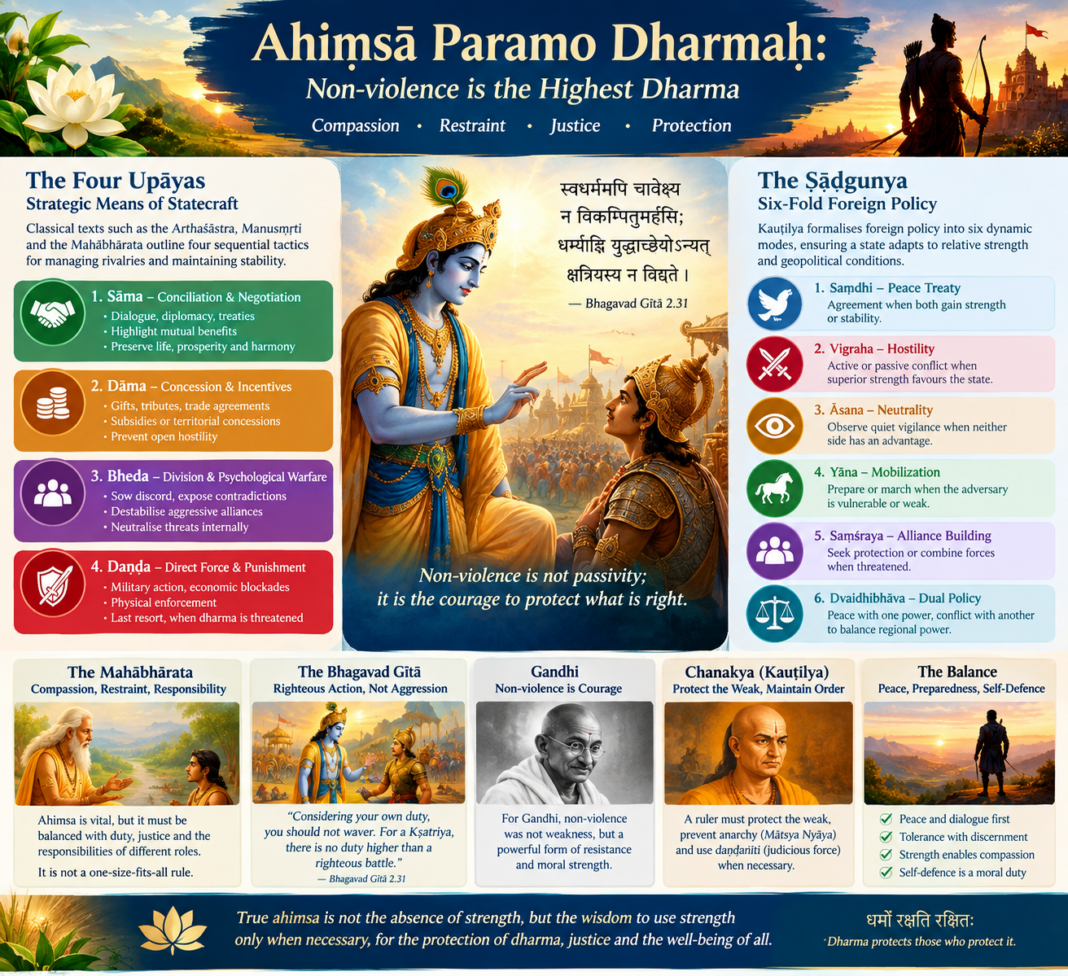
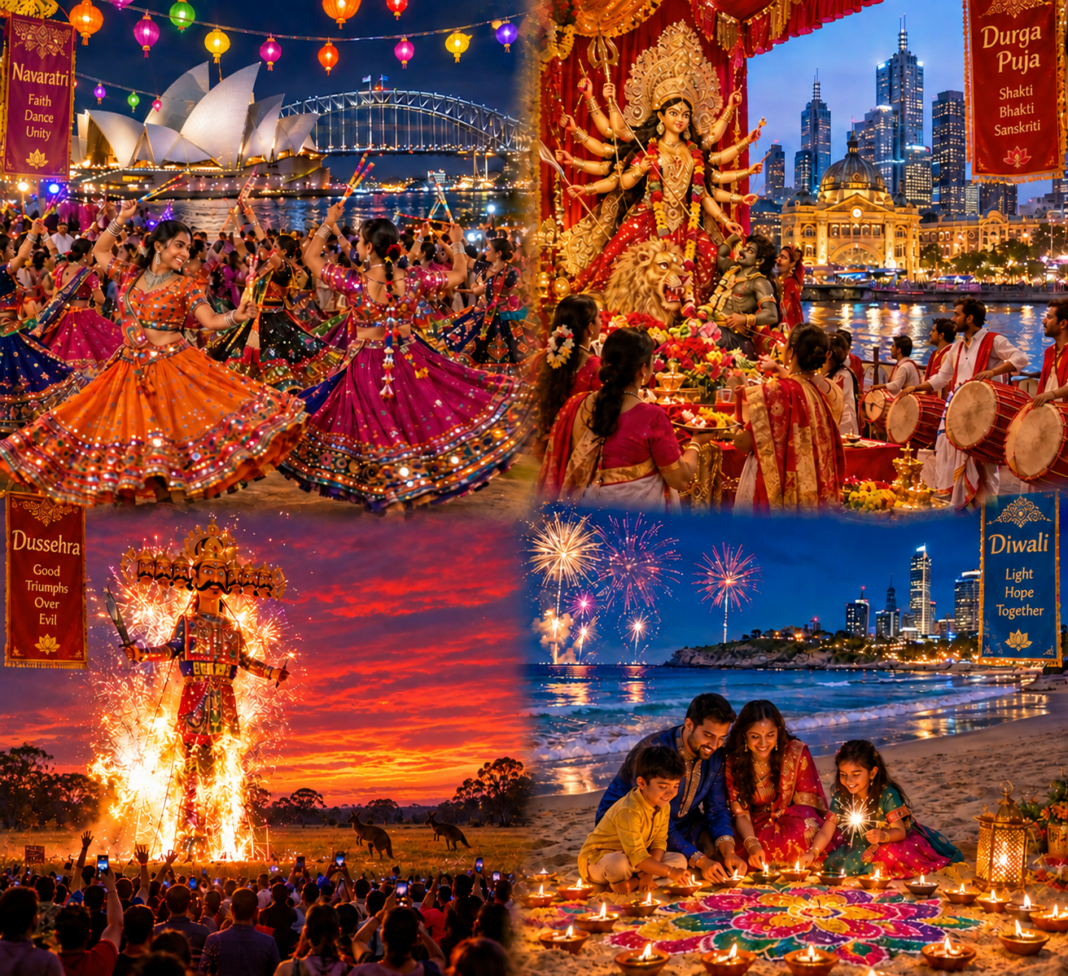
The choice of month is not arbitrary. October usually hosts the densest cluster of observances in the Hindu calendar: Navarātri and Durgā Pūjā, Vijayadaśamī (Dussehra), Śarad Pūrṇimā, Karvā Cauth and, often, Dīpāvalī itself [2][12]. It is also the birth month of Mahatma Gandhi, whose life gave the world a modern expression of ahiṃsā, or non-violence [1].
Because the Hindu calendar is lunisolar, festivals drift across the Gregorian months; fixing the observance to October gives the community a stable civic window while honouring the seasonal rhythm of śarad, the autumn festival season of the subcontinent.
The philosophy behind it
At its heart, Hindu Heritage Month is less about one religion’s festivals than about Sanātana Dharma as a living civilisational tradition. Organisers describe it as a global movement highlighting Hinduism as a tradition and its contributions to human society [1]. Those contributions are wide: yoga and meditation, Āyurveda, the decimal numeral system and zero, classical music and dance, and a philosophical vocabulary – dharma, karma, ahiṃsā, sevā – that has entered everyday English.
Several ideas give the month its character. The first is pluralism. The Ṛgvedic maxim ‘ekaṁ sad viprā bahudhā vadanti’ – truth is one, the wise call it by many names – underpins the organisers’ deliberately ‘open source’ model, in which any temple, school, cultural group or individual may host an event, showcasing the diversity fundamental to Hindu civilisation [2].
The second is ‘vasudhaiva kuṭumbakam’, the world as one family, which frames the month as an invitation to neighbours rather than an inward-looking celebration.
The third is intergenerational transmission: for children raised far from India, the month provides structured occasions to learn stories, languages, music and values. Commentators have suggested emphasising inclusiveness, knowledge, family, non-violence and charity [13].
There is also a defensive dimension. Organisers have openly framed the month as a response to misunderstanding and what they term Hinduphobia, an aim to replace caricature with first-hand knowledge [3]. The month’s success rests on keeping that educational, outward-facing spirit at its centre.
Acceptance in Australia
Hinduism is now one of the fastest-growing faiths in Australia, with roots going back to nineteenth-century arrivals from the subcontinent [14]. The groundwork for Hindu Heritage Month was laid over decades.
The Hindu Council of Australia (HCA), founded in 1998, inaugurated its large public Deepavali festival in Sydney in 1999, and took Deepavali into NSW Parliament in 2003 and Federal Parliament in 2004 – an annual fixture ever since [15]. The Council also helped draft the Hinduism component of the NSW HSC Studies of Religion syllabus [15]. The HCA is listed as a participating organisation of the global Hindu Heritage Month initiative [16].
The decisive step came in October 2024. The HCA prepared a formal proposal for parliamentary recognition [17], and on 10 October 2024 Dr Andrew Charlton, Member for Parramatta, rose in the House of Representatives to endorse ‘the suggestion of the Hindu Council to call this month Hindu Heritage Month’, listing Navarātri, Durgā Pūjā, Karvā Cauth, Diwali, Lakṣmī Pūjā and Chhaṭh Pūjā, and declaring that the month ‘should be embraced by all Australians’ [18].
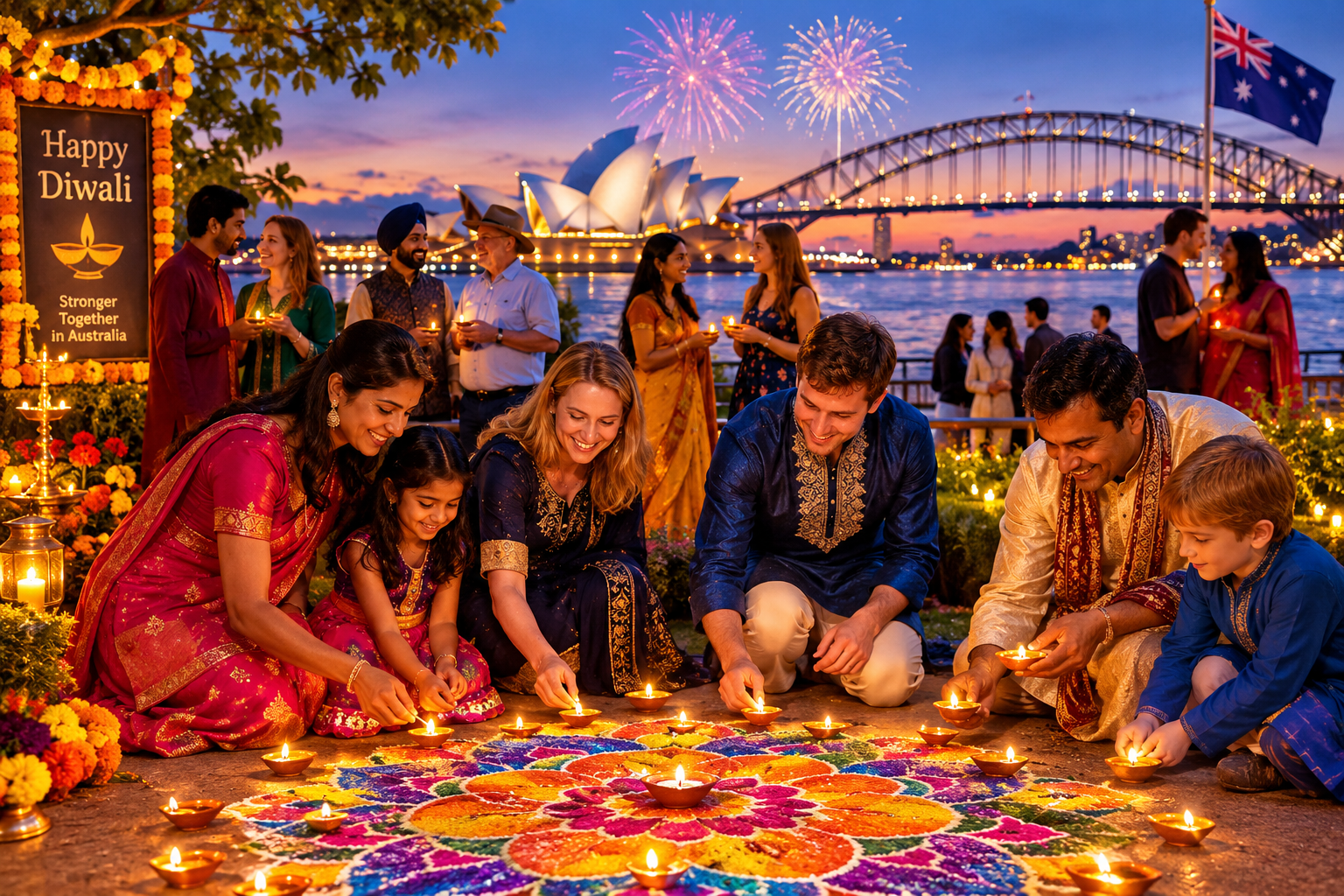
Recognition has since deepened. The City of Sydney has acknowledged Hindu Heritage Month [20], and in October 2025 the federal Minister for Multicultural Affairs, Dr Anne Aly, formally extended greetings for Hindu Heritage Month, describing Hindu engagement as ‘an integral part of the country’s multicultural story’ and noting that by sharing their heritage, ‘all Australians gain the opportunity to experience the depth and diversity of one of the oldest living cultures’ [14].
Parallel investments, such as NSW Government support of $3.75 million for a Hindu Cultural and Education Centre in Parramatta, reflect growing institutional engagement [21].
The efforts behind its success
Several factors explain why the idea gained traction so quickly. Long-term relationship building came first: two decades of parliamentary Deepavali events created trusted channels between community leaders and legislators across parties [15].
Second, advocates presented clear, low-cost asks – a proclamation or a speech rather than a funding demand – that fitted naturally within Australia’s bipartisan commitment to multiculturalism.
Third, the ‘open source’ model meant temples, cultural associations, yoga schools and youth groups could all contribute events without central control, building visible momentum [2]. Finally, diaspora networks shared templates and precedents internationally, so that each new proclamation in one country strengthened the case in another.
Looking ahead
Hindu Heritage Month has grown from a small community initiative into a global observance in barely a decade. The next steps advocates have flagged include formal state or federal designation and continued campaigns for Deepavali to be recognised in the national calendar [23].
Engaging openly with Hindus from all backgrounds including from India, Nepal, Fiji, and Bali will be important to its long-term legitimacy. Whatever form recognition takes, the month’s enduring value lies in its original philosophy: lighting a lamp not just for one’s own household, but for the whole neighbourhood.
References
[1] Hindu American Foundation – Hindu Heritage Month: https://www.hinduamerican.org/haaam
[2] Hindu Heritage Month – Announcement: https://hindumonth.org/hello-world/
[3] Organiser (2021) – Bharat’s Fest in the US: https://organiser.org/2021/10/20/18344/bharat/bharat-s-fest-in-the-us-celebrating-hindu-culture/
[4] India Today (2021) – US states to celebrate October as Hindu Heritage Month: https://www.indiatoday.in/world/story/us-october-hindu-heritage-1857173-2021-09-25
[5] Business Standard/PTI – Americans celebrate October as Hindu Heritage Month: https://www.business-standard.com/article/pti-stories/americans-celebrate-october-as-hindu-heritage-month-121102600129_1.html
[6] Lokvani – Virginia becomes first state to declare October as Hindu Heritage Month: https://www.lokvani.com/lokvani/article.php?article_id=18909
[7] Virginia General Assembly – HJ141: https://legacylis.virginia.gov/cgi-bin/legp604.exe?221+ful+HJ141ER+pdf
[8] New Jersey Legislature – Joint Resolution No. 2: https://pub.njleg.gov/Bills/2024/PL24/1002_.PDF
[9] Governor of Minnesota – Hindu Heritage Month 2026 proclamation: https://mn.gov/governor/assets/10.01.26%20Hindu%20Heritage%20Month_tcm1055-770193.pdf
[10] Patch – South Brunswick declares October Hindu Heritage Month: https://patch.com/new-jersey/southbrunswick/south-brunswick-declares-october-hindu-heritage-month
[11] Government of Canada Publications – An Act to designate October as Hindu Heritage Month: https://publications.gc.ca/site/eng/9.862849/publication.html
[12] Organiser – Hindu Heritage Month celebrations begin in United States: https://organiser.org/2022/10/18/96860/international/hindu-heritage-month-celebrations-begin-in-united-states/
[13] Psychiatric Times – Hindu Heritage Month: https://www.psychiatrictimes.com/view/hindu-heritage-month
[14] The Indian Sun (2025) – Minister Anne Aly honours Hindu Heritage Month: https://www.theindiansun.com.au/2025/10/20/minister-anne-aly-honours-hindu-heritage-month-and-the-communitys-growing-contribution/
[15] Indian Link – Hindu Council marks 20 years: https://www.indianlink.com.au/hindu-council-marks-20th-year/
[16] Hindu Heritage Month – Participants: https://hindumonth.org/list-of-participants/
[17] Hindu Council of Australia – Proposal to officially recognise Hindu Heritage Month: https://hinducouncil.com.au/proposal-to-officially-recognise-the-hindu-heritage-month/
[18] Hindu Council of Australia – Government MP recognises Hindu Heritage Month: https://hinducouncil.com.au/governemnt-mp-recognises-hindu-heritage-month/
[19] The Commune – Australia declares October as Hindu Heritage Month: https://thecommunemag.com/sanatana-dharma-in-bharat-and-beyond-18-key-global-developments-in-2024/
[20] Hindu Council of Australia – Site map (City of Sydney acknowledgement): https://hinducouncil.com.au/site-map/
[21] NSW Government – Hindu Cultural Centre finds a home in Sydney’s West: https://www.nsw.gov.au/ministerial-releases/hindu-cultural-centre-finds-a-home-sydneys-west
[22] Asian Studies Review (2026) – The Quiet Mainstreaming of Transnational Hindutva: https://www.tandfonline.com/doi/full/10.1080/10357823.2026.2710197
[23] Hindu Council of Australia – Gratitude in Action: https://hinducouncil.com.au/gratitude-in-action-honouring-our-community-champions/