

Imagine a game of tag transformed into a fast-paced competitive sport requiring speed, strategy, agility, teamwork and split-second decision-making. That is Kho-Kho, one of India’s oldest traditional sports and a game that is now finding a new home in Australia.
For generations, Kho-Kho has been played in Indian schools, communities and competitive sporting environments. The basic idea is easy to understand: one team chases while the opposing team’s runners attempt to avoid being tagged. What looks simple from the sidelines quickly becomes a highly strategic contest requiring acceleration, sharp changes of direction, communication and teamwork.
Ancient roots in Maharashtra
Kho-Kho is widely regarded as one of the oldest tag sports in the world, with roots in the ancient Indian subcontinent. It is believed to have developed in the western Indian state of Maharashtra. The name comes from the Marathi language, where kho imitates the call players make when passing the chase to a teammate. Some historians have also linked the game’s pursuit-and-evasion tactics to scenes from the Mahabharata, although this connection is traditional rather than firmly documented.
The modern game took shape in the early twentieth century. In 1914, the Deccan Gymkhana club in Pune established the first structured rules, and the Kho-Kho Federation of India was formed in 1955. The first national championship followed in 1959 in Vijayawada. Kho-Kho was also demonstrated at the 1936 Berlin Olympics, and the sport later spread across South Asia and to diaspora communities in places such as South Africa, England and now Australia.
Today, the sport is moving well beyond its traditional roots.
From traditional sport to a World Cup
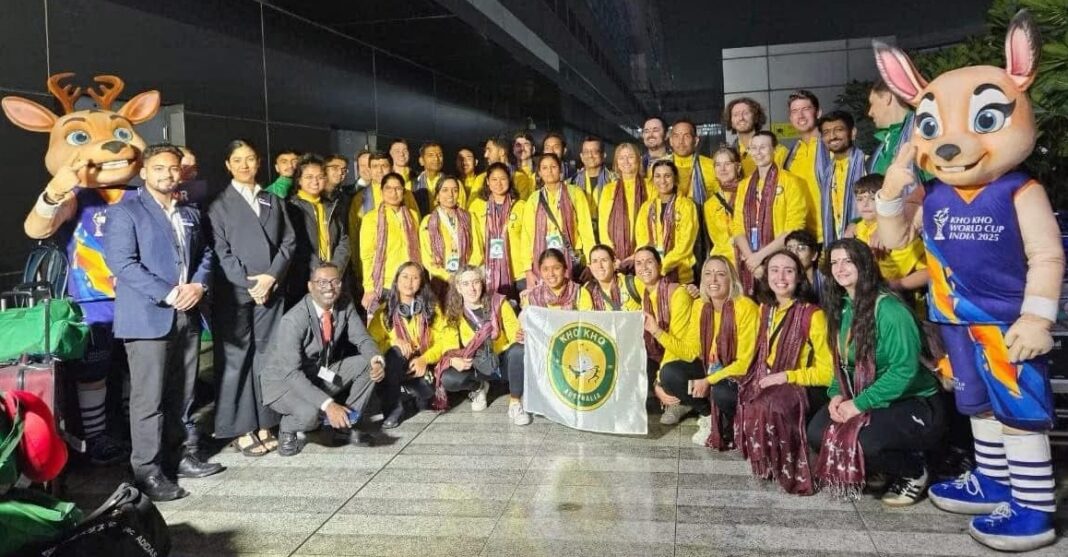
A major milestone came with the inaugural Kho-Kho World Cup 2025, held at the Indira Gandhi Indoor Stadium in New Delhi from 13–19 January 2025. The event brought together 20 men’s teams and 19 women’s teams, representing 23 countries across six continents.
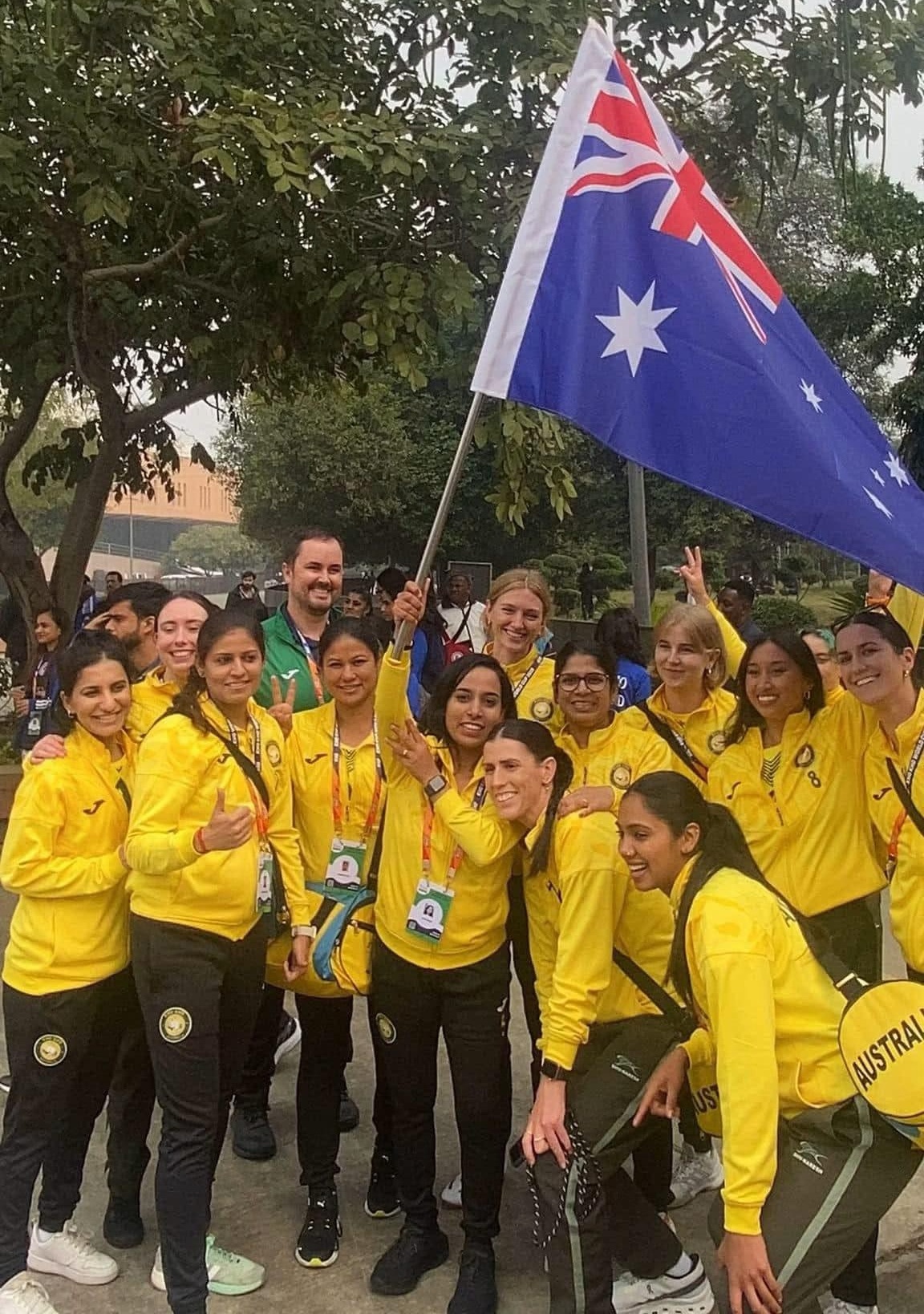
Australia was proudly among them.
For the first time, Australia fielded both men’s and women’s Kho-Kho teams on the international stage, with 15 players selected in each squad. ABC Asia described it as Australia’s international debut in the sport, highlighting the multicultural backgrounds of the Australian teams.
For a relatively new organised sport in Australia, standing alongside established Kho-Kho nations at a World Cup represented an extraordinary first step.
Rapid growth in Australia
Since then, participation has grown significantly.
Kho-Kho Australia, the national organisation supporting the development of the sport, has been building competitions, community participation and playing opportunities around the country.
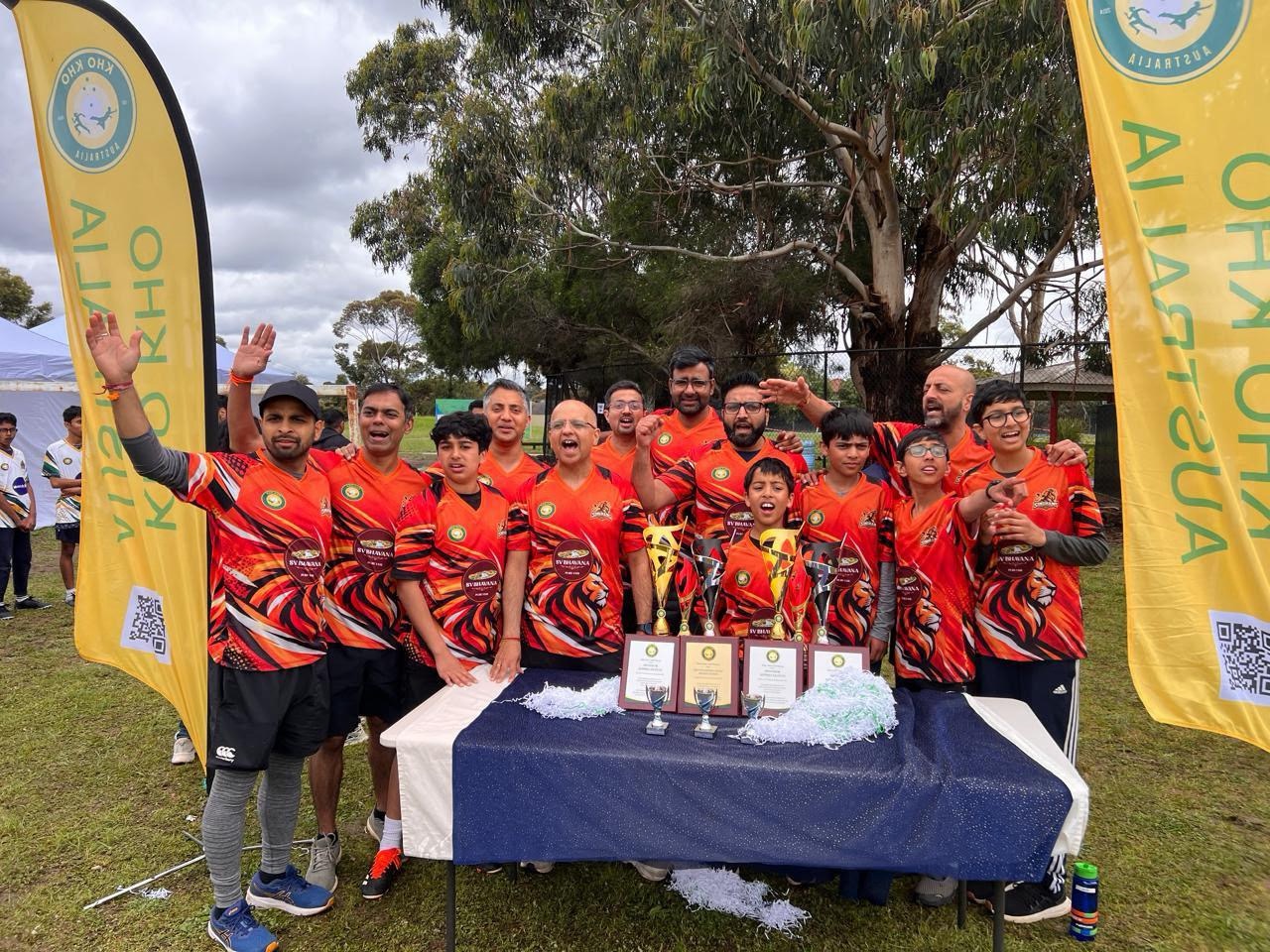
That growth was particularly visible at Australia’s Second National Kho-Kho Championship, held from 13–15 November 2026 at Waverley Meadows Primary School in Wheelers Hill, Victoria. The three-day championship brought together 20 teams, comprising 10 men’s and 10 women’s teams, with approximately 300 players and more than 20 team officials representing six Australian states and territories.
The increase has been remarkable. Kho-Kho Australia President Raj Sura noted that in 2024 the organisation had to search for around 30 players to represent Australia, whereas approximately 300 players participated in the 2026 National Championship.
More than competition
For Australia’s growing Indian community, Kho-Kho provides something beyond competitive sport.
Many adults recognise it from their childhoods, while Australian-born children are discovering it for the first time. This creates an unusual bridge between generations: parents can share a sport they grew up playing while their children experience it in a distinctly Australian, multicultural sporting environment.
Kho-Kho also has a relatively simple entry point. Players do not require expensive individual equipment to start learning the game. At community level, what matters most is having suitable playing space, markings, poles and people willing to participate.
That accessibility creates an opportunity for schools, community organisations and sporting groups to introduce another form of physical activity to children and adults.
And although Kho-Kho has Indian origins, its future in Australia does not need to be limited to the Indian community. Australia’s World Cup representatives themselves demonstrated the multicultural potential of the game.