

वक्रतुण्ड महाकाय सूर्यकोटि समप्रभ ।
निर्विघ्नं कुरु मे देव सर्वकार्येषु सर्वदा ॥
About Lord Gaṇeśa
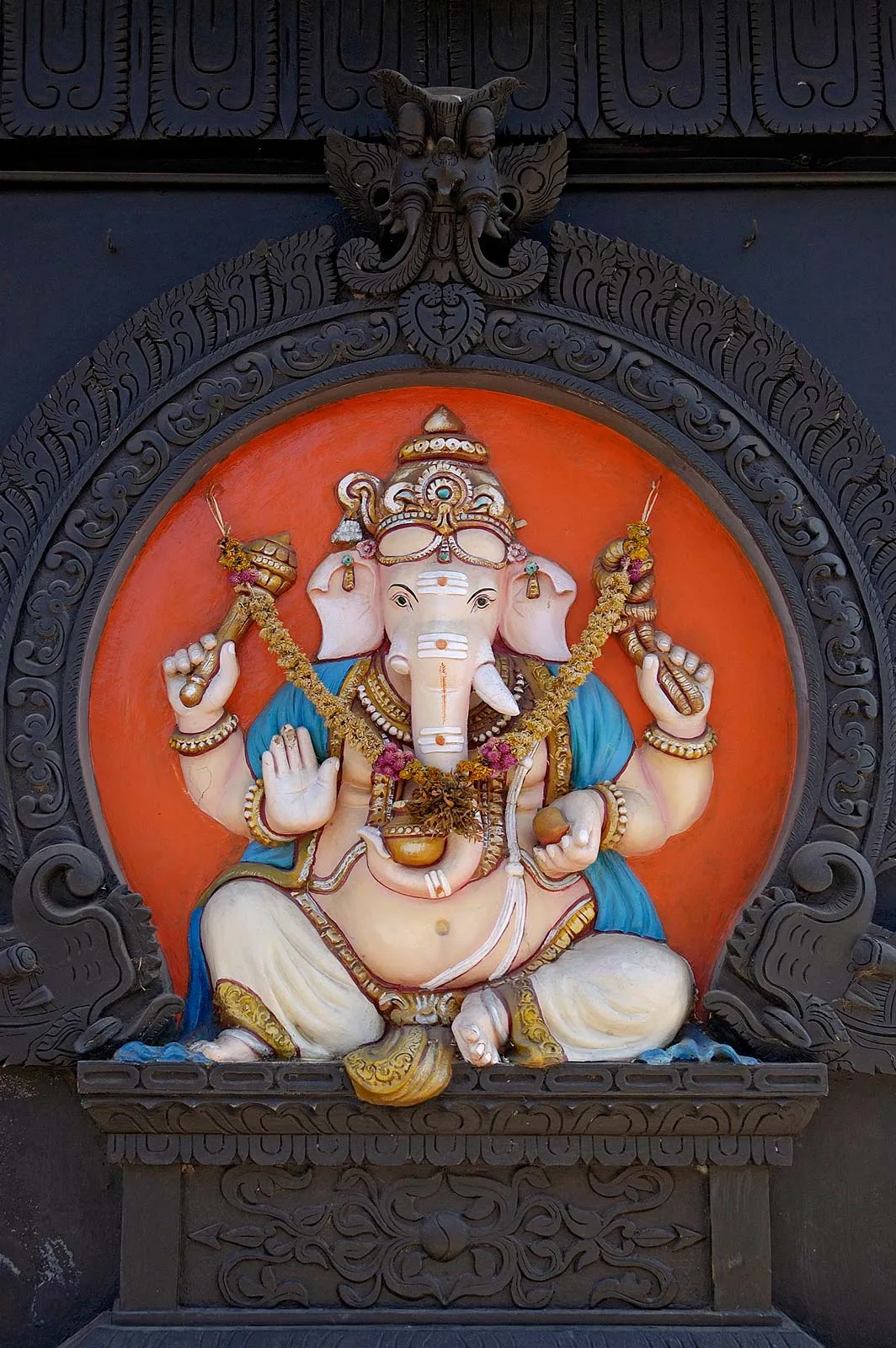
Among the many deities of Hinduism (Sanātana Dharma), Lord Gaṇeśa (गणेश) or Vināyaka (विनायक) occupies a uniquely beloved place in the hearts of millions of Hindus as well as non-Hindus. Whenever a Hindu starts any act, be it a prayer, a journey, a new business, or study, we first say the word Shri Gaṇeśāya namah (श्री गणेशाय नमः) (meaning salutations to Gaṇeśa [गणेश]; the word Shri [श्री] is an honorific). This reminds us that success begins with humility, clear thinking, and faith in the Bhagavāna (भगवान).
Here we look at Gaṇeśa’s unknown facts and stories. For Lord Gaṇeśa’s (गणेश) birth (appearance) and attributes refer to Optics Australia article here, and for the visarjana (विसर्जन, submersion) related information, refer here.
Core Mapping in Tantra and Yoga
- Gaṇeśa (गणेश) = deity (adhiṣṭhātṛ devatā [अधिष्ठातृ देवता]) of Mūlādhāra (मूलाधार). Classical and contemporary Tantric/Yogic sources consistently identify Lord Gaṇeśa (गणेश) as the presiding deity of the root chakra, the earth-element centre at the base of the spine.
- Pārvatī (पार्वती) = Kuṇḍalinī Śakti (कुण्डलिनी शक्ति). In Śākta–Śaiva (शाक्त-शैव) Tantra, the Goddess (Devī [देवी] / Pārvatī [पार्वती] / Śrīdevī [श्रीदेवी]) is the supreme energy (Parāśakti [पराशक्ति]) that, in the embodied yogic map, “sleeps” as the coiled Kuṇḍalinī (कुण्डलिनी) in Mūlādhāra (मूलाधार) and rises through suṣumṇā (सुषुम्णा) to unite with Śiva (शिव) in Sahasrāra (सहस्रार).
- Śiva (शिव) = pure consciousness. Śiva (शिव) is described as the static, unchanging, all-pervading consciousness (cit [चित] / ānanda [आनंद]), the “destination” of yoga when Kuṇḍalinī-Śakti (कुण्डलिनी-शक्ति) merges with him at the crown.
Together these form a single soteriological narrative: grounded stability (Gaṇeśa [गणेश]), awakening energy (Pārvatī [पार्वती] / Kuṇḍalinī [कुण्डलिनी]), liberating awareness (Śiva [शिव]).
Why Gaṇeśa (गणेश) at Mūlādhāra (मूलाधार)?
Mūlādhāra (मूलाधार) (mūla [मूल] = root, ādhāra [आधार] = support) is the foundation chakra associated with the earth element (pṛthvī tattva [पृथिवी तत्त्व]), survival, and bodily stability. Gaṇeśa (गणेश), with his elephant head and massive, steady form, symbolises grounded intelligence, removal of obstacles, and auspicious beginnings—exactly the qualities needed to stabilise practice at the base.
Tantric narratives deepen this: Gaṇeśa (गणेश) is said to be born from Pārvatī’s (पार्वती) bodily “dirt” mixed with earth, linking him explicitly to pṛthvī (पृथ्वी) and to Mūlādhāra (मूलाधार) as the earth-centre. He is thus the gatekeeper who makes the yogic journey safe and auspicious.
Pārvatī (पार्वती) as Kuṇḍalinī Śakti (कुण्डलिनी शक्ति)
In this schema, Pārvatī (पार्वती) is not only Śiva’s (शिव) consort mythologically; she is Śakti (शक्ति) herself—the dynamic power of consciousness. In the subtle body, that power is visualised as a serpent (kuṇḍala [कुण्डल] = coiled) sleeping in Mūlādhāra (मूलाधार). When practices (mantra [मंत्र], prāṇāyāma [प्राणायाम], bhakti [भक्ति], etc.) purify the system, Kuṇḍalinī (कुण्डलिनी) “awakens,” ascends the central channel (suṣumṇā [सुषुम्णा]), and moves chakra by chakra toward the crown. This ascent is the means of yoga; the Goddess-as-energy is both vehicle and goal because, non-dualistically, Śakti (शक्ति) and Śiva (शिव) are one.
Śiva (शिव) as Consciousness (The Goal)
Śiva (शिव) is portrayed as expressionless, unmoving, infinite consciousness—the silent witness beyond all modification. In Kuṇḍalinī (कुण्डलिनी) Yoga, Sahasrāra (सहस्रार) (the thousand-petalled lotus at the crown) is Śiva’s (शिव) seat; when Śakti (शक्ति) reaches and merges with Śiva (शिव) there, the result is samādhi (समाधि) / liberation. Thus:
- Śiva (शिव) = the unchanging ground of awareness (cit [चित्]).
- Śakti (शक्ति) = the active power that reveals that awareness in experience.
The 32 Classical Forms of Gaṇeśa (गणेश)
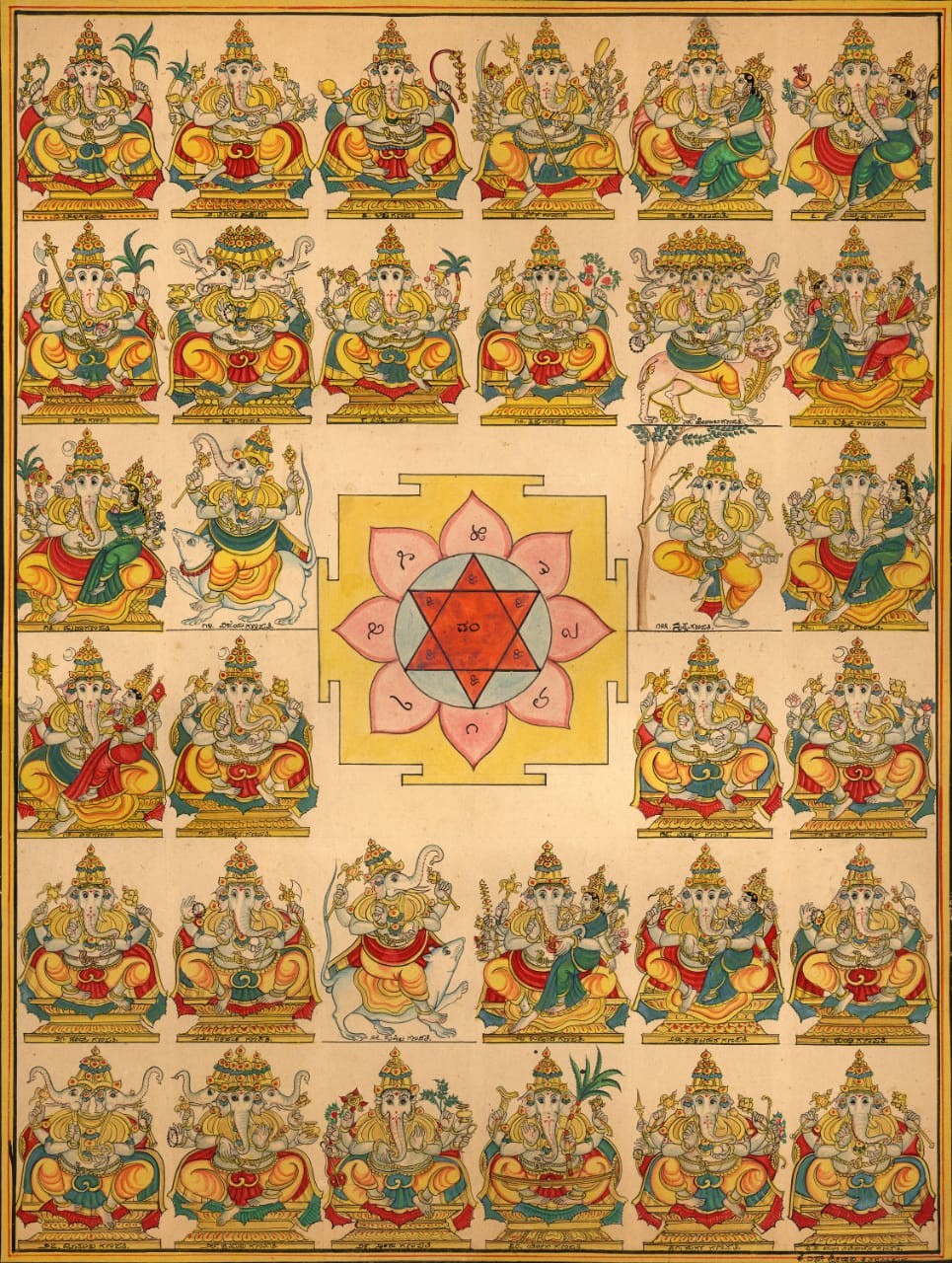
- Bāla Gaṇapati (बाल गणपति): The child-like form representing earth’s fertility and innocence.
- Taruṇa Gaṇapati (तरुण गणपति): The youthful form symbolising blossoming energy.
- Bhakti Gaṇapati (भक्ति गणपति): The form dear to devotees, shining like a harvest moon.
- Vira Gaṇapati (वीर गणपति): The valiant warrior holding sixteen symbolic weapons.
- Shakti Gaṇapati (शक्ति गणपति): The powerful protector of the household, seated with a consort.
- Dvija Gaṇapati (द्विज गणपति): The twice-born form associated with discipline and knowledge.
- Siddhi Gaṇapati (सिद्धि गणपति): The embodiment of achievement and self-control.
- ucchiṣṭa Gaṇapati (उच्छिष्ट गणपति): The guardian of culture and blessed offerings.
- Vighna Gaṇapati (विघ्न गणपति): The master who creates and removes obstacles.
- Kshipra Gaṇapati (क्षिप्र गणपति): The quick bestower of boons and rewards.
- Heramba Gaṇapati (हेरम्ब गणपति): The five-faced protector of the weak riding a lion.
- Lakshmi Gaṇapati (लक्ष्मी गणपति): The giver of success, wisdom, and wealth.
- Mahā Gaṇapati (महा गणपति): The great, majestic lord accompanied by his shakti (शक्ति).
- Vijaya Gaṇapati (विजय गणपति): The victorious lord riding his mount, the mouse.
- nṛtya Gaṇapati (नृत्य गणपति): The happy dancer celebrating life and fine arts.
- ūrdhva Gaṇapati (ऊर्ध्व गणपति): The elevated lord representing spiritual ascent.
- Ekākshara Gaṇapati (एकाक्षर गणपति): The master of the single seed-syllable “Gam” (गं).
- Varada Gaṇapati (वरद गणपति): The compassionate boon-giver with a third eye.
- Tryakshara Gaṇapati (त्र्यक्षर गणपति): The lord of the three sacred letters: A, U, and M.
- Kshipra Prasada Gaṇapati (क्षिप्र प्रसाद गणपति): The quick-pleased dispenser of grace.
- Haridrā Gaṇapati (हरिद्रा गणपति): The golden-yellow turmeric form inspiring progress.
- Ekadanta Gaṇapati (एकदन्त गणपति): The single-tusked form representing absolute focus.
- sṛṣṭi Gaṇapati (सृष्टि गणपति): The joyful creator and lord of happy manifestations.
- Uddaṇda Gaṇapati (उद्दण्ड गणपति): The fearless enforcer of cosmic law and dharma (धर्म).
- ṛṇamocana Gaṇapati (ऋणमोचन गणपति): The liberator from human debts, guilt, and bondage.
- Ḍhuṇḍhi Gaṇapati (ढुण्ढि गणपति): The sought-after guide helping devotees attain moksha.
- Dvimukha Gaṇapati (द्विमुख गणपति): The two-faced form seeing in all directions.
- Trimukha Gaṇapati (त्रिमुख गणपति): The three-faced form seated on a golden lotus.
- Simha Gaṇapati (सिंह गणपति): The fearless warrior seated upon a lion.
- Yoga Gaṇapati (योग गणपति): The meditative form absorbed in deep spiritual practice.
- Durga Gaṇapati (दुर्गा गणपति): The invincible form bearing the strength of Goddess Durga.
- saṅkaṭahara Gaṇapati (सङ्कटहर गणपति): The ultimate dispeller of sorrow and grief.
Many Names, One Lord
Lord Gaṇeśa (गणेश) is also known by many names: gaṇapati (गणपति), vināyaka (विनायक), vighneśvara (विघ्नेश्वर), vighnahartā (विघ्नहर्ता), ekadanta (एकदन्त), lambodara (लम्बोदर), gajānana (गजानन), and siddhivināyaka (सिद्धिविनायक).
Each name reveals a different aspect of his personality:
- Gaṇapati (गणपति): The Lord or Leader (pati [पति]) of the Ganas (गण) (the celestial attendants and armies of Lord Shiva [शिव]).
- Vināyaka (विनायक): The Supreme Leader or Guide.
- Vighneśvara (विघ्नेश्वर): The Lord of Obstacles.
- Vighnahartā (विघ्नहर्ता): The Destroyer or Remover of Obstacles.
- Ekadanta (एकदन्त): The Single-Tusked Lord, who wrote down the epic Mahabharata (महाभारत) dictated by the sage Vyasa (व्यास).
- Lambodara (लम्बोदर): The Large-Bellied Lord.
- Gajānana (गजानन): The Elephant-Faced One.
- Siddhivināyaka (सिद्धिविनायक): The Bestower of Success and Fulfillment, granting siddhi.
Historical Context & Gaṇeśotsava (गणेशोत्सव)
The greatest literary work in the Marathi language is the Dnyāneshvarī (ज्ञानेश्वरी), a poetic commentary on the Bhagavadgītā (भगवद्गीता) written around 1290 AD by Sant Dnyāneshwara.. He opens the poem with a direct salutation to Lord Gaṇeśa:
ॐ नमोजी आद्या । वेद प्रतिपाद्या ॥ जय जय स्वसंवेद्या । आत्मरूपा ॥१॥
Om salutation to the Supreme, described in the Vedas.
Victory to that Self-known One, pure one of all intelligence.
During the festival of Gaṇeśotsava (गणेशोत्सव), the fourth day of Bhādrapada (भाद्रपद) is observed as Gaṇeśa caturthī (गणेश चतुर्थी). Families install clay mūrtis (मूर्ति) commissioned from local artisans, using durvā (दुर्वा) grass and offerings of modak (मोदक). The service concludes with an ārati (आरती) written by the 17th century saint Samartha Rāmdas (समर्थ रामदास).
सुखकर्ता दुःखहर्ता वार्ता विघ्नाची।
नुरवी पुरवी प्रेम कृपा जयाची।
सर्वांगी सुन्दर उटि शेंदुराची।
कण्ठी झळके माळ मुक्ताफळांची॥
जय देव जय देव जय मंगलमूर्ती।
दर्शनमात्रे मनकामना पुरती॥
sukhakartā duḥkhahartā vārtā vighnācī |
nuravī puravī prema kṛpā jayācī |
sarvāṃgī sundara uṭi śeṃdurācī |
kaṇṭhī jhaḷake māḷa muktāphaḷāṃcī ||
jaya deva jaya deva jaya maṃgalamūrtī |
darśanamātre manakāmanā puratī ||
Meaning: Oh Lord who provides Joy, takes away Sadness and removes all (obstacles) in life, Who spreads love everywhere as his blessing, Who has lovely yellow-orange fragrance paste all over his body, Who has a necklace of pearls around his neck, Hail the god, Hail the god, Hail the auspicious lord, whose mere appearance fulfils all the desires.
Gaṇapati (गणपति) & Morayā Gosāvi (मोरया गोसावी)
During pūja (पूजा), the atmosphere is filled with the chants of Gaṇapati Bāppā Morayā (गणपति बाप्पा मोरया) and Mangalamūrti Morayā (मंगलमूर्ति मोरया). The phrase “Gaṇapati Bāppā Morayā” derives from Morayā Gosāvī, a prominent 14th-17th century saint of the Gāṇapatya sect (गाणपत्य) devoted to Lord Ganesha.
From childhood, Morayā showed deep spiritual inclination, making regular monthly pilgrimages on foot from Chinchwad to the Mayureshwar Temple in Morgāon. As Morayā grew older, travel became difficult. According to tradition, a divine vision led him to discover a sacred Gaṇeśa mūrti in the Pavanā River, leading to the establishment of the shrine at Chinchwad (Mangalmurti Wādā). Morayā Gosāvī entered sanjīvana samādhi (संजीवन समाधि) (conscious spiritual departure) on the banks of the Pavanā River.
Traditional accounts hold that Lord Gaṇeśa decreed his devotee’s name would be forever paired with his own, linking their invocation together. Together the chants “Gaṇapati Bāppā Morayā” and Mangalamūrti Morayā mean that Gaṇapati is the father of Morayā and Morayā is the embodiment of all auspiciousness (Morayā = morayā gosāvi [मोरया गोसावी]).
Gaṇeśa and Gaṇeśhotsava remains a central cultural spiritual and indeed highly economic event across India, and now globally carried by the Indian Diaspora. Gaṇeśhotsava is celebrated in countless homes and now very visible in major and minor cities and towns in many countries across continents.
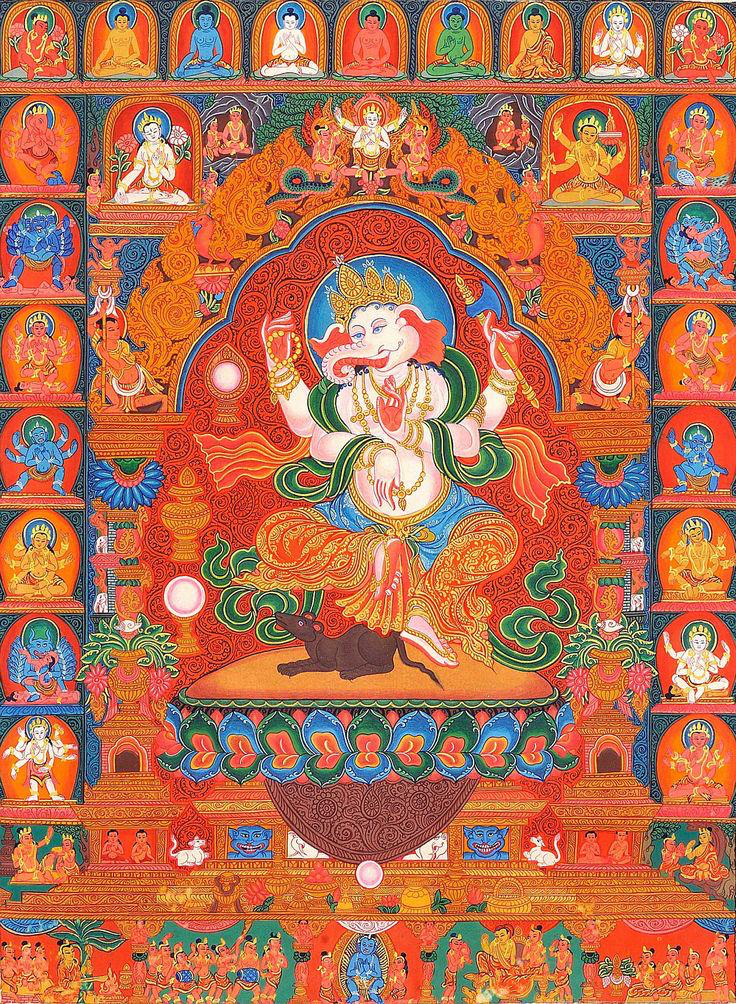
॥ॐ गं गणपतये नमः॥
References
- Optics Australia Article: Ganeshotsav-and-the-significance-of-ganapati-for-hindus
- Optics Australia Article: gaṇesotsava-and-gaṇapati-visarjana
- Mūlādhāra. https://en.wikipedia.org/wiki/Muladhara
- The Satsang Foundation. Significance of Lord Ganesha. https://satsang-foundation.org/posts-and-updates/significance-of-lord-ganesha
- Frawley, D. (Vamadeva Shastri). The Hidden Truth Behind Sri Ganesha’s Mystic Image. Vedanet. https://www.vedanet.com/the-hidden-truth-behind-sri-ganeshas-mystic-image/
- Soundarya Lahari (Wave of Beauty). https://rudraksha1.rssing.com/chan-13852466/all_p1.html
- Shanti Within. Kundalini Yoga and Spiritual Awakening. Awareness Magazine. https://shantiwithin.com/wp-content/uploads/2018/05/jan-feb-2015-awareness-e-mag-10.pdf
- Vedik Heritage. Symbolism of Lord Ganesha. https://vedikheritageblog.wordpress.com/symbolism-in-hinduism/symbolism-of-lord-ganesha/
- Lord Ganesha: His Birth Story, Symbolism, Meaning and Practice. https://www.amritapuri.org/3714/ganesha.aum
- Ganesh Chaturthi – Satsang with Mohanji (Part 3). https://mohanji.org/blogs/satsangs/ask-mohanji/ganesh-chaturthi-part3/
- Shree Ganesh. 32 Forms of Lord Shree Ganesh. https://shreeganesh.com/site/about/829/32-forms-of-lord-shree-ganesh
- Jñāneśvara. (1987). Jnaneshvari (V. G. Pradhan, Trans.). State University of New York Press.